Childhood Trauma Therapy | Inner Child Therapy
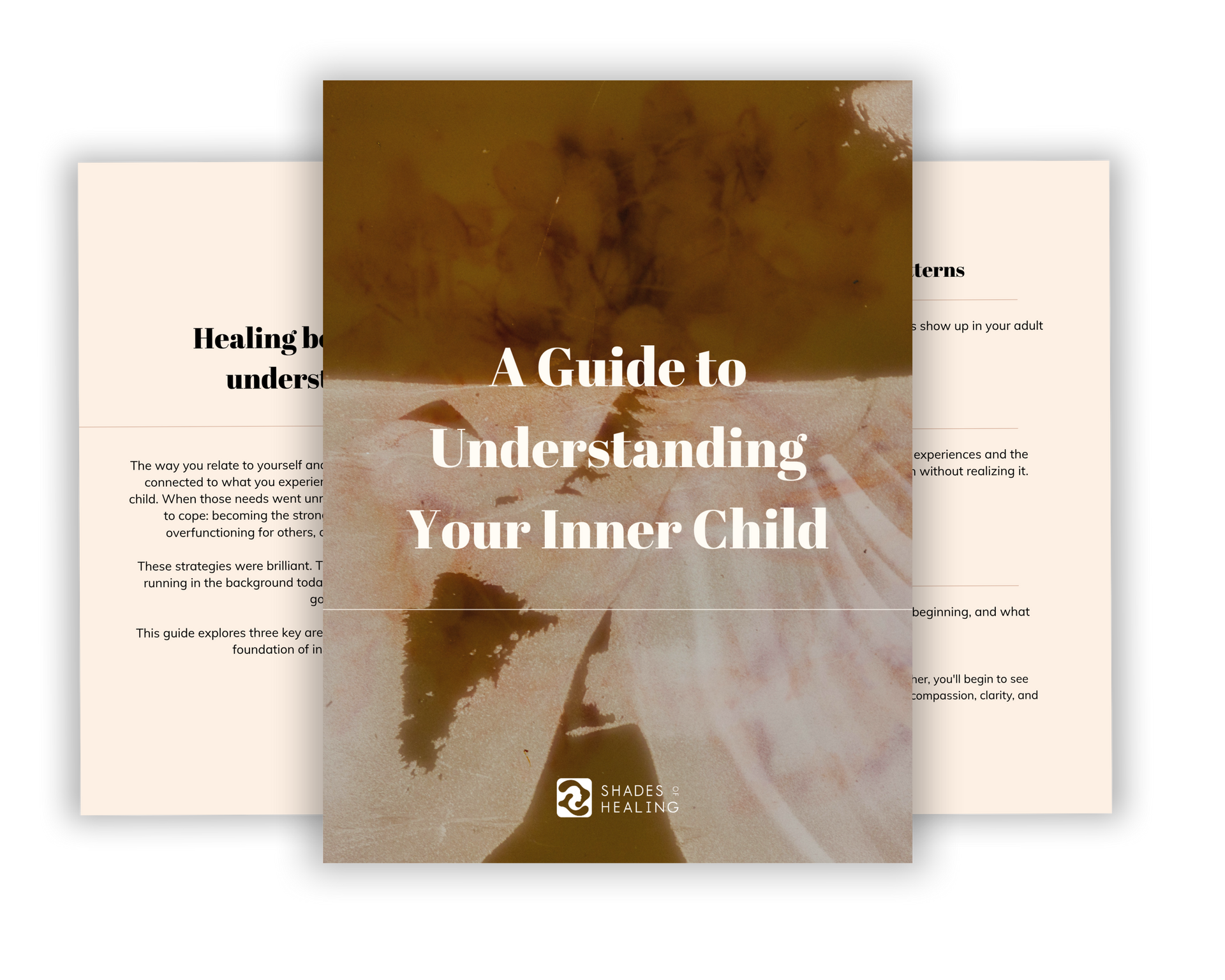
Something happened when you were young, maybe it was obvious, maybe it was quiet, and part of you has been responding to it ever since. You might not call it trauma. You might just call it the way things are. But you notice it in your relationships, in how you respond when someone disappoints you, in the way certain situations make your body tighten before your mind catches up. In case you are new here, we are Shades of Healing, a trauma-informed therapy practice for high-achieving women of color. If you are looking for childhood trauma therapy or inner child work, you are in the right place. Below we will explore how early experiences shape adult life, what inner child healing involves, and how support can begin to feel different.
What is childhood trauma therapy?
Childhood trauma therapy is a structured, trauma-informed approach that helps adults understand how early experiences, including what happened to them and what was missing, continue to shape how they think, feel, relate, and move through the world. It is not about endlessly revisiting the past. It is about understanding how the past is still showing up in the present, so you can start responding differently. Inner child work is a key component of this approach. It involves connecting with the younger parts of yourself that are still operating from old wounds, old rules, and old fears, the parts that learned to stay small, stay strong, or stay silent in order to survive. Those strategies made sense then. They are limiting you now.
Most common symptoms of unhealed childhood trauma
- Emotional reactivity: You feel fine, and then something small happens and the response feels bigger than the moment. You may feel flooded, shut down, or unable to explain the intensity.
- Hypervigilance: You are always reading the room, tracking people's moods, waiting for something to go wrong. It is exhausting and feels automatic.
- Difficulty trusting: Even when people show up consistently, a part of you stays guarded. Letting someone in fully feels too risky.
- People-pleasing or over-functioning: You learned early that your needs come second, or that love had to be earned. You are still operating from that script.
- The same patterns in different relationships: The faces change but the dynamic repeats. Something familiar keeps finding you.
- Disconnection from your body: You live in your head because your body does not always feel safe. Anxiety, numbness, and chronic tension are common.
- Inner critic: A voice that tells you that you are too much, not enough, or that your pain is not valid.
How do I know if I may be experiencing unhealed childhood trauma?
Do I often feel like my reactions are bigger or older than the situation in front of me? This gap between what happened and how big it lands can be a sign that an earlier wound is getting activated. Do I struggle to identify what I need or feel guilty asking for it? Learning early that your needs were a burden can make it feel dangerous to want anything, even now. Do I keep ending up in the same emotional dynamics with different people? Relational patterns that repeat across relationships often trace back to the emotional blueprint laid down in childhood. Do I feel pressure to have it all together and find it hard to let anyone see you struggle? The "strong one" role is often assigned early. It protects, and it also isolates. Do I feel a persistent sense that something is wrong with me, even when things are going well? Shame that has no clear source often has childhood roots.
Who this support is for
This support may be a strong fit if you are a woman of color who is tired of knowing your patterns without being able to change them, if you have been the caretaker, the capable one, or the one who holds everything together and you are running on empty, if you come from a family where emotions were not safe to express, if your body holds anxiety or tension you cannot explain, or if you want to understand why certain relationships and situations keep activating you. This approach may not be the best fit if you are currently in active crisis or need a higher level of care than weekly outpatient therapy. We are happy to help you identify the right level of support.
How we treat childhood trauma and inner child wounds
At Shades of Healing, childhood trauma is treated as a nervous system experience, not just a story to retell. Insight matters. But insight alone does not create change, and many women who come to us have already done years of reading, journaling, and self-reflection. They understand their patterns. They are still repeating them. This is because the wounds live in the body, in the nervous system, in the automatic responses that happen before the thinking mind has a chance to intervene. Sessions draw on trauma-informed modalities including EMDR, somatic awareness, and inner child work. We move at the pace your nervous system can tolerate, not faster. There is no pressure to revisit everything at once. The goal is to create enough safety in the therapeutic relationship that the younger parts of you can begin to trust that things can be different now. As the work deepens, clients often notice that emotional reactions become less automatic. Relationships begin to feel different. The inner critic quiets. You are no longer reacting from an old fear, instead you are responding from a place of alignment.
Steps to work with us
Schedule Your Consultation
We'll start with a conversation about what's bringing you to therapy, the patterns you're noticing, and what you're hoping to create in your life and relationships.
Begin The Healing Work
Together, we'll explore the experiences, wounds, and survival strategies that have shaped how you relate to yourself and others, using trauma-informed approaches and inner child work tailored to your needs.
Return To Your True Essence
As healing happens at the source, you'll begin letting go of patterns that no longer serve you and reconnecting with the version of yourself that feels more grounded, authentic, and free.
Childhood trauma specialist
Jamie Fowler is a Licensed Clinical Social Worker (LCSW) specializing in trauma-informed therapy for high-achieving women of color. Jamie brings her own healing journey to this work, she knows from the inside what it feels like to be the capable one, to have built a successful life while privately feeling disconnected from herself. Her approach is warm, direct, and grounded in the body. She does not ask clients to leave their culture or their complexity at the door.
What topics can we work on in childhood trauma therapy?
- Understanding where your patterns come from and why they made sense at the time
- Reconnecting with younger parts of yourself that are still operating from old fear or shame
- Processing memories or experiences that your mind has moved on from but your body has not
- Developing self-compassion that does not feel like empty affirmation
- Building a different relationship with your inner critic
- Healing the wounds that affect how you show up in relationships, in your body, and in your daily choices
- Breaking patterns that have been in your family for generations

We are Shades of Healing
A therapy practice dedicated to helping women of color move beyond survival mode and reconnect with the truest version of themselves. Through trauma-informed therapy, EMDR, and intentional healing, we create a space where emotional patterns can be understood at their source, making room for deeper healing, self-trust, and lasting change.
Investment
Individual Therapy Sessions
$200 per 50-minute session
Therapy is an investment in your healing, your relationships, and your overall well-being. Sessions are personalized to your unique needs and may incorporate trauma therapy, EMDR, and inner child work depending on your goals.
Questions about scheduling or getting started? We'd be happy to help.
FAQ about childhood trauma therapy and inner child work
What is inner child therapy and how does it work?
Inner child therapy is an approach that connects adult clients with younger parts of themselves that are still holding unresolved emotional pain, fear, or shame from childhood. It works by creating a safe therapeutic relationship in which those parts can be acknowledged, heard, and gradually healed. It is not age regression. It is developing compassion and understanding for the version of you who needed something they did not get.
Can childhood trauma affect adult relationships?
Yes, this is one of the most consistent findings in trauma research. Early experiences shape the attachment patterns, emotional responses, and relational expectations we bring into every adult relationship. When those early experiences involved inconsistency, emotional unavailability, criticism, or chaos, we often unconsciously recreate similar dynamics in adulthood because they feel familiar, even when they are painful.
How do I know if I need childhood trauma therapy?
You may benefit from childhood trauma therapy if you notice that the same emotional dynamics repeat across different relationships, if your reactions sometimes feel bigger or older than the situation in front of you, if you struggle to trust people even when they are showing up consistently, or if you carry a persistent sense of shame or not-enoughness that has no clear source in your current life.
How long does childhood trauma therapy take?
There is no universal timeline. Some clients experience meaningful shifts within a few months. Others do deeper, longer-term work. The pace depends on the complexity of what you are carrying, your goals, and what feels sustainable. We focus on progress, not performance.
What can I expect in a first therapy session for childhood trauma?
The first session is a conversation, not an intake interview. You can share as much or as little as feels right. We will talk about what brought you in, what you are hoping to feel or experience differently, and get a sense of whether this feels like a good fit. You will not be asked to go deep before you feel safe enough to do so.